
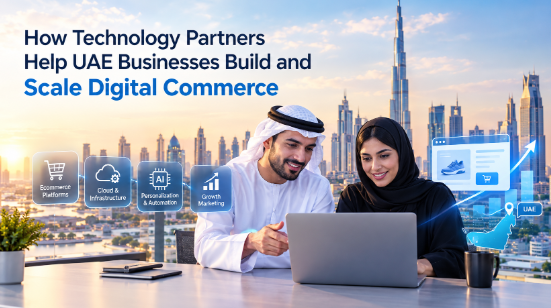
The UAE has developed into a major hub for digital business, retail, technology and entrepreneurship. Businesses in Dubai, Abu Dhabi and other parts of the country are increasingly investing in eCommerce to reach customers across the UAE and wider GCC region.
However, building an online store is only one part of digital commerce. Businesses also need reliable technology, connected systems, secure infrastructure and a digital experience that meets changing customer expectations.
This is where technology partners can make a difference. From choosing an eCommerce platform to integrating business systems and improving website performance, the right technology partner can help UAE businesses build a stronger foundation for long-term digital growth.
For businesses considering Shopify website development in Dubai, for example, working with an experienced development and technology team can help create a storefront that reflects local market requirements while remaining flexible enough to support future expansion.
Why UAE Businesses Need a Strong Digital Commerce Strategy
The UAE’s digital economy is highly competitive. Customers are accustomed to using smartphones, digital payments, online marketplaces and on-demand services. This means businesses need to provide convenient digital experiences across multiple touchpoints.
An eCommerce website therefore needs to do more than display products. It should make it easy for customers to search, compare, purchase and receive products while giving businesses the systems they need to manage operations efficiently.
Several technologies often work together behind a modern digital commerce operation:
- eCommerce platforms manage products, orders, customers and online transactions.
- CRM systems help businesses manage customer relationships and engagement.
- ERP platforms connect areas such as inventory, finance, procurement and operations.
- Analytics platforms provide insights into customer behaviour and business performance.
- Cloud infrastructure supports website performance, availability and scalability.
For UAE businesses expanding across Dubai and other markets, connecting these systems can become increasingly important as order volumes and operational complexity grow.
How Technology Partners Support UAE Digital Commerce
A technology partner can support businesses across different stages of their digital transformation journey. Instead of treating website development, integrations and IT infrastructure as separate projects, businesses can develop a more connected technology strategy.
Choosing the Right eCommerce Platform
Selecting an eCommerce platform depends on the company’s products, business model, target customers, operational requirements and growth plans.
Shopify is widely used by businesses that want a flexible platform for creating and managing online stores. It provides features for product management, payments, order processing and storefront management, while its ecosystem supports additional applications and integrations.
For UAE businesses, choosing the right Shopify implementation approach can also involve considering local payment preferences, delivery requirements, multilingual content and regional expansion.
A specialist Shopify web development company can help businesses customise the platform around these requirements. Professional Shopify partner can include storefront development, theme customisation, third-party integrations, functionality development and ongoing optimisation.
Building Digital Experiences for UAE Customers
Customer expectations can vary between markets. UAE businesses often serve diverse audiences, including local customers, expatriates and international visitors.
This makes factors such as mobile usability, language options, payment methods and delivery experience particularly important.
For example, a retailer operating in Dubai may need to provide a mobile-first shopping experience, support appropriate payment options, display pricing and VAT information clearly, and provide delivery choices that suit customers across different locations.
A technology partner can help businesses identify these requirements during the planning stage instead of attempting to add them after the website has already been launched.
The result can be a digital commerce experience that is easier for customers to use and easier for internal teams to manage.
Connecting eCommerce With Business Systems
As an online business grows, the eCommerce website becomes connected to more systems.
A Shopify store may need to communicate with an ERP for inventory and financial information, a CRM for customer data, a payment provider for transactions and logistics platforms for fulfilment.
Without proper integration, employees may need to move information manually between different systems. This can increase administrative work and create opportunities for data errors.
An experienced technology partner can use APIs and integration technologies to connect these platforms.
For example, when a customer places an order, information can move automatically from the online store to inventory and fulfilment systems. Stock levels can then be updated while relevant teams receive the information they need to process the order.
This type of automation becomes increasingly valuable for UAE businesses managing higher order volumes or expanding into multiple markets.
The Role of an IT Solutions Company
eCommerce development is only one part of a company’s technology environment. Businesses also need reliable infrastructure, security, software integration and technical support.
An experienced IT solutions company can help businesses address these broader technology requirements.
Depending on the organisation’s needs, an IT partner may support:
IT infrastructure: Building and maintaining the technology environment required to run business applications.
Cloud solutions: Helping businesses use scalable cloud infrastructure and services.
Cybersecurity: Protecting systems, applications and business information through appropriate security practices.
System integration: Connecting different applications so that information can move efficiently between them.
Technical support: Monitoring systems, resolving issues and helping minimise operational disruption.
For growing companies, working with an experienced IT services company can also provide access to specialised expertise without requiring every technical capability to be developed internally.
An IT solutions provider can assess the existing technology environment and identify areas where businesses can improve efficiency, security and scalability.
Why Shopify Development and IT Services Should Work Together
Shopify development and IT services have different areas of focus, but they often need to work together.
Shopify development focuses primarily on the customer-facing commerce experience. IT services can support the infrastructure, integrations, security and technology environment behind that experience.
Consider a Dubai-based retailer expanding its online operations. Its Shopify store may manage product discovery, shopping carts and checkout. Behind the store, however, the company may also need ERP integration, CRM connectivity, inventory management, analytics and security controls.
If these systems are developed independently, integration problems can appear later. A technology partner can instead consider the complete technology ecosystem during the planning stage.
This can help businesses achieve:
- Better operational efficiency through automation
- More consistent customer and product data
- Improved visibility across business operations
- Easier integration between applications
- Greater flexibility when entering new markets
- A stronger foundation for future digital initiatives
The objective is not to introduce technology simply because it is available. Each system should solve a specific business problem and contribute to the overall digital strategy.
What UAE Businesses Should Look for in a Technology Partner
Selecting a technology partner requires more than reviewing technical capabilities. Businesses should also consider how well a provider understands their market, business model and long-term objectives.
Technical Experience
Review the provider’s experience with eCommerce platforms, Shopify development, system integrations, cloud technologies and enterprise applications.
Understanding of the UAE Market
A partner working with UAE businesses should understand relevant regional considerations, including customer expectations, payment preferences, multilingual experiences, VAT-related requirements and delivery models.
Scalability
The technology architecture should be able to support business growth. This could include increasing website traffic, larger product catalogues, additional integrations or expansion into other GCC markets.
Security and Support
Businesses should understand how a technology partner approaches security, maintenance, monitoring, updates and technical support after implementation.
Clear Communication
Successful technology projects require clear responsibilities, realistic timelines and regular communication. Businesses should establish these expectations before development begins.
Looking at previous projects and client experience can also help organisations understand how a provider approaches complex technical requirements.
Preparing Dubai Businesses for Long-Term Digital Growth
Digital commerce does not remain static. Customer expectations, technology capabilities and business requirements continue to change.
A website that meets today’s needs may require new functionality as the business grows. UAE companies should therefore think about technology as an ongoing investment rather than a one-time website project.
Businesses can regularly review website performance, customer behaviour, conversion data, system integrations and operational processes to identify opportunities for improvement.
Emerging technologies such as artificial intelligence and automation can also support specific business processes. AI-powered recommendations, automated customer support, demand forecasting and intelligent merchandising are examples of capabilities businesses may consider as their digital operations mature.
The important point is to adopt technology based on a clear business requirement rather than following trends without a defined purpose.
Conclusion
For UAE businesses, digital commerce offers opportunities to reach customers locally and across the wider GCC region. However, sustainable growth requires more than launching an online store.
Businesses need an appropriate eCommerce platform, reliable IT infrastructure, connected systems, secure technology and ongoing optimisation.
Combining Shopify development with broader IT expertise can help businesses create a digital commerce environment that supports both customer experience and operational efficiency. Whether a company is launching its first online store in Dubai or expanding an established commerce operation across the UAE, the right technology strategy can provide a stronger foundation for growth.
Magneto IT Solutions is a next-gen digital commerce and growth marketing partner for global brands, helping businesses build, integrate and scale digital commerce ecosystems. By combining eCommerce expertise with broader technology capabilities, businesses can create digital experiences that are designed not only for today’s customers but also for future growth.
Author BIo

Azhar, the Manager for Strategy & Consulting at Magneto IT Solutions UAE, is an expert in eCommerce strategy with extensive consulting experience. He is committed to empowering both B2C and B2B businesses in the UAE region. He has an impressive track record of providing strategic consulting to over 200 clients, with more than 80% of them experiencing remarkable revenue growth through their online channels. With his exceptional ability to identify opportunities and develop effective strategies, he continuously drives progress and helps businesses achieve their goals.

