When we think about home design, we often focus on the grand gestures — the architectural lines, the landscaping, the front door color. Yet some of the most powerful design decisions are the smallest ones. A house number, for instance, is one of the first things a visitor, a delivery driver, or a potential buyer notices. It signals something about the people who live inside. In an era where homeowners are paying closer attention to every detail of their exterior presentation, the humble address marker has evolved into a genuine design statement.
The Exterior Detail That Does More Than You Think
Curb appeal is a concept most homeowners understand in theory but underestimate in practice. The exterior of a home communicates before anyone steps through the door. It sets expectations, creates emotional impressions, and — particularly in competitive real estate markets — can meaningfully influence perceived value. Landscaping and paint colors get most of the attention, but the finer details are what separate a thoughtfully designed exterior from a merely maintained one.
Address numbers fall squarely into this category of overlooked details. Outdated, mismatched, or poorly placed numerals can undercut an otherwise polished facade. Conversely, clean, well-proportioned, and stylistically coherent numbers can pull an entire exterior together. They function as punctuation — small but essential to the overall sentence the home is making to the world.
Why Proportion and Material Matter
Not all house numbers are created equal. The difference between a generic plastic numeral from a hardware store and a precision-crafted metal address marker is immediately visible. Material quality affects not only aesthetics but longevity. Brushed stainless steel, matte black aluminum, and powder-coated finishes resist weathering, maintain their appearance through seasons, and complement a wide range of architectural styles — from mid-century modern to contemporary farmhouse.
Proportion is equally critical. Numbers that are too small get lost on a wide facade. Numbers that are oversized can look clumsy or institutional. The ideal size depends on the mounting surface, the distance from the street, and the overall scale of the home’s exterior elements. A well-chosen set of address numbers feels inevitable — as though they were always meant to be there.
Design Philosophy: When Function Meets Aesthetic Intention
There is a broader conversation happening in residential design about what a home should communicate beyond its square footage and floor plan. How a space feels has become as important as how it looks on paper — and that philosophy extends naturally to the exterior. Homeowners are increasingly asking not just “Is this functional?” but “Does this reflect who we are?” Address numbers, in this context, are no longer afterthoughts. They are intentional choices that contribute to a home’s overall emotional register.
This shift in thinking mirrors what has happened in interior design over the past decade. Hardware, fixtures, and trim details — once selected purely for utility — are now chosen with the same care as furniture and art. The exterior is simply the next frontier of that same design consciousness.
Matching Numbers to Architectural Style
One of the most common mistakes homeowners make is selecting address numbers in isolation, without considering the architectural language of the home. A sleek sans-serif numeral in brushed nickel looks perfectly at home on a contemporary build with clean lines and minimal ornamentation. That same numeral might feel jarring on a craftsman bungalow, where a more textured, warm-toned option would harmonize better with the wood details and earthy palette.
The good news is that the range of available styles has expanded dramatically. Homeowners today can find address numbers in fonts and finishes that align with virtually any architectural vocabulary — from industrial loft aesthetics to coastal cottage sensibilities. The key is to treat the selection process with the same intentionality applied to any other design decision.
The New American Home and the Details That Define It
Contemporary residential design in America has been moving toward a synthesis of comfort, individuality, and refined simplicity. As explored in Veranda’s look at the new American house, today’s homes blend warmth with sophistication, rejecting both sterile minimalism and cluttered maximalism in favor of spaces — and exteriors — that feel genuinely lived-in and considered. Address numbers are a small but telling part of this larger story. They signal whether a homeowner has thought carefully about every layer of their home’s presentation or left the exterior to chance.
In this design climate, the exterior is understood as an extension of the interior — a continuation of the same values and aesthetic sensibility. A home that is beautifully appointed inside but neglected outside sends a mixed message. Conversely, a home whose exterior details are as carefully chosen as its interior finishes communicates a coherent, confident design vision.
Placement and Visibility: Practical Considerations
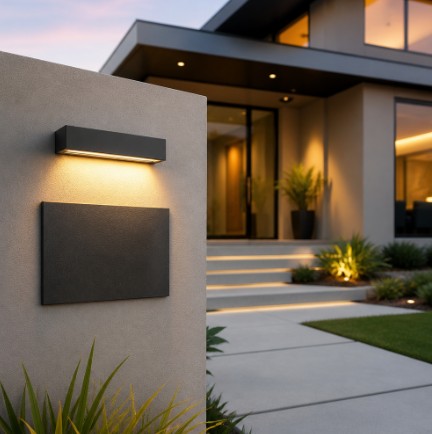
Beyond aesthetics, address numbers serve a critical practical function: they must be legible. Emergency responders, delivery services, and guests all depend on clear, visible house numbers. Placement should account for sightlines from the street, lighting conditions at night, and potential obstructions from landscaping. Illuminated or backlit options have grown in popularity precisely because they solve the visibility problem without sacrificing style. A well-lit address number is both a safety feature and a design asset — particularly effective in the evening hours when a home’s exterior lighting creates its own atmosphere.
Modern House Numbers: A Brand Built on Precision and Design
Modern House Numbers has built its reputation on the understanding that address numbers deserve the same design attention as any other element of a home’s exterior. The brand offers a curated selection of address markers crafted from premium materials, available in a range of finishes and typographic styles that complement contemporary and transitional architecture. Their products are designed to be both visually striking and built to last — a combination that homeowners increasingly demand from every detail of their home.
What distinguishes this brand is its commitment to treating a functional object as a design object. Every numeral is considered in terms of weight, proportion, finish, and legibility — ensuring that the final result enhances rather than detracts from the home’s overall presentation. For homeowners who have invested in their property’s exterior, this level of craft is not a luxury — it is a logical extension of their design values.
Conclusion: Small Details, Lasting Impressions
The exterior of a home is its first conversation with the world. Every element contributes to that conversation — the landscaping, the paint, the lighting, and yes, the address numbers. In a design culture that increasingly values intentionality and craft, overlooking these small details is no longer acceptable. Choosing address numbers that are well-proportioned, beautifully finished, and architecturally appropriate is one of the simplest and most effective ways to elevate a home’s exterior. It is a small investment that pays dividends in curb appeal, perceived value, and the quiet satisfaction of knowing that every detail has been considered.