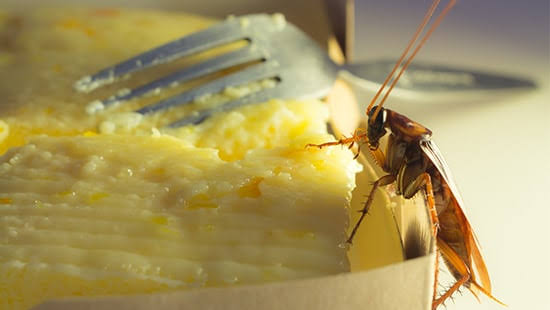
Cockroaches contaminate foods by carrying bacteria on their legs and bodies and by leaving droppings, saliva, and shed skins on kitchen surfaces. They walk through drains and garbage before touching plates, utensils, and open food, spreading pathogens such as Salmonella and E. coli. Seal entry points, remove food and water sources, and use gel baits or professional treatment to stop the spread.
Why Do Cockroaches Enter Kitchens?
Cockroaches enter kitchens because kitchens supply food, water, warmth, and shelter in one place. A German cockroach needs only a crumb-sized meal and a few drops of water to survive. Removing these sources and booking cockroach pest control in Dubai stops the problem at its root.
Food residue attracts them: Cockroaches eat grease, starch, sugar, pet food, and even soap residue. Crumbs under appliances and greasy stovetops feed a colony around the clock.
Water sources keep them alive: A cockroach survives about one month without food but only one week without water. Leaking pipes, wet sink mats, and standing water under dishwashers draw them in.
Warm, humid conditions speed up breeding: Dubai’s temperatures of 25–40°C and high humidity let cockroach populations grow quickly. A female German cockroach produces an egg case holding 30–40 eggs and can produce up to 8 cases in her lifetime.
Tiny cracks give them access: Adult German cockroaches squeeze through gaps as thin as 1.6 mm. They enter through gaps around pipes, door frames, wall sockets, and drain lines.
Cardboard and grocery deliveries carry them in: Egg cartons, delivery boxes, and grocery bags often transport cockroaches and egg cases into apartments, villas, and restaurants.
Dark hiding spots protect them: Cockroaches hide behind refrigerators, inside cabinet hinges, and under sinks during the day. They come out at night to feed.
How Cockroaches Contaminate Foods and Kitchen Surfaces
Cockroaches spread germs through direct contact, droppings, saliva, and body parts. Each route moves bacteria from unsanitary places to the surfaces where you prepare food.
Their legs carry bacteria from drains: Cockroaches crawl through sewers, garbage bins, and drain pipes. They pick up bacteria on spiny legs and transfer it to countertops, cutting boards, and food packaging.
Their droppings leave pathogens on surfaces: Cockroach feces contain Salmonella and other bacteria. Droppings look like black pepper grains or ink smears and collect in cabinet corners and along hinges.
Their saliva and vomit spoil food: Cockroaches regurgitate digestive fluid onto food before eating it. This fluid leaves bacteria on bread, fruit, rice, and open containers.
Their shed skins and body parts trigger allergies: Cockroach skins, egg cases, and dead bodies release allergens into kitchen dust. These allergens aggravate asthma, especially in children.
Their foraging pattern spreads contamination widely: One cockroach visits drains, bins, food shelves, and utensils in a single night. A small infestation spreads germs across the whole kitchen within days.
What Health Risks Do Contaminated Foods Cause?
Foods contaminated by cockroaches cause food poisoning, diarrhea, and stomach infections. Researchers have identified more than 30 bacterial species on cockroaches, including Salmonella, E. coli, Staphylococcus, and Shigella.
Symptoms of food poisoning include vomiting, stomach cramps, fever, and diarrhea. Children, older adults, and pregnant women face the highest risk. Cockroach allergens also cause sneezing, skin rashes, and asthma attacks.
For restaurants and cafes in Dubai, the stakes include more than health. Dubai Municipality food safety rules require pest-free premises, and a cockroach sighting can lead to fines, inspection failures, or closure.
Signs of a Cockroach Infestation in Your Kitchen
Spot these signs early to stop cockroaches contaminating food:
- Black droppings resembling coffee grounds or pepper in cabinets and drawers
- A musty, oily odor near sinks and appliances
- Brown, capsule-shaped egg cases behind refrigerators and under shelves
- Live cockroaches in the open when you switch on the lights at night
- Smear marks along walls and pipes
- Shed skins in dark corners
One daytime sighting signals a large colony, because cockroaches avoid light and only leave hiding when space runs out.
How to Control Cockroaches in the Kitchen?
Follow this how-to guide to remove cockroaches and protect your food.
Remove all food sources: Store dry food in airtight glass or hard plastic containers. Cover fruit bowls and move pet food indoors only at meal times.
Clean grease and crumbs daily: Wipe countertops, stovetops, and tables every night. Use a degreaser on the cooker hood and behind the stove, where grease builds up.
Fix water leaks: Repair dripping taps and leaking pipes. Dry the sink completely before bed to remove the water cockroaches need.
Seal entry points: Fill cracks with silicone caulk. Cover drain openings and install door sweeps on exterior doors. Seal gaps around pipes with steel wool and sealant.
Take out garbage every night: Use bins with tight lids. Rinse recyclables before storing them.
Apply gel bait: Place cockroach gel bait in cabinet corners, hinges, and behind appliances. Cockroaches eat the bait and carry poison back to the nest, which kills other cockroaches within days.
Use traps and growth regulators: Sticky traps monitor activity. Insect growth regulators such as hydroprene stop nymphs from becoming breeding adults.
Call professionals for infestations: Store-bought sprays kill visible cockroaches but miss hidden colonies. A licensed technician locates nests and treats the source.
Kitchen Cockroach Prevention Checklist
Use this checklist weekly to keep cockroaches out:
- Wipe all surfaces with disinfectant after cooking
- Store food in sealed containers
- Empty the trash every night
- Clean under and behind appliances
- Dry the sink and drain area
- Inspect delivery boxes before bringing them inside
- Check pipes and cabinets for leaks
- Replace damaged door seals
- Schedule professional inspections every 3–6 months
Professional Cockroach Control Solutions
Professional treatment removes colonies that DIY methods miss. Technicians use gel baits, residual sprays, insect growth regulators, and targeted crack-and-crevice applications. These methods reach cockroaches hiding inside walls and behind fixtures.
A trained team starts with an inspection to identify the species, usually German, American, or Oriental cockroaches, and finds the nesting areas. They apply treatments approved by Dubai Municipality and follow up to confirm the colony is gone.
Allied Pest Control provides cockroach pest control in Dubai for homes, restaurants, hotels, and warehouses. The team uses safe, municipality-approved treatments and schedules follow-up visits to prevent re-infestation. For wider protection against ants, rodents, bed bugs, and termites, explore professional pest control services in Dubai.
Conclusion
Cockroaches contaminate foods and kitchen surfaces through legs, droppings, saliva, and shed skins, and they spread bacteria such as Salmonella and E. coli. They enter kitchens for food, water, warmth, and shelter, so removing those four factors cuts their numbers fast.
Follow the step-by-step guide, use the weekly checklist, and apply gel baits to control small problems. For larger infestations, book a licensed technician before cockroaches contaminate foods your family eats.
Frequently Asked Questions
Do cockroaches contaminate food overnight?
Yes. Cockroaches feed at night and contaminate open food within hours. Cover all food and wash surfaces each morning.
Is food safe to eat after a cockroach touches it?
No. Throw away any food a cockroach touched. Cooking does not remove all toxins and allergens.
Can cockroaches contaminate utensils and dishes?
Yes. They crawl across stored plates, cups, and cutlery. Wash all kitchenware in hot water before use if you find signs of cockroaches.
How fast can a cockroach infestation grow?
A single German cockroach female can generate thousands of descendants within a year under warm, humid conditions.