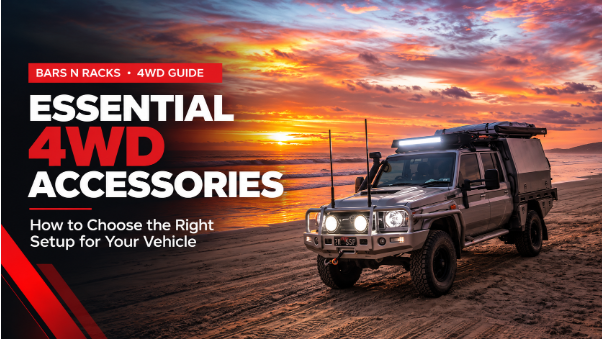
Preparing a four-wheel drive for off-road trips involves more than adding accessories and heading out on an adventure. The right equipment can improve storage, protect the vehicle, support recovery in challenging conditions and make longer journeys more practical.
However, not every accessory suits every vehicle or driving environment. A setup designed for weekend camping may have different requirements from a vehicle used for remote touring, work or regular off-road driving.
Understanding your needs before purchasing equipment can help you build a practical setup without adding unnecessary weight or compromising vehicle compatibility.
1. Start With Your Vehicle and Driving Requirements
Before choosing 4WD accessories, consider how you use your vehicle and the conditions you expect to encounter.
A vehicle used for occasional camping trips may benefit from basic storage solutions, an awning and suitable recovery equipment. Drivers planning extended touring may need additional protection, lighting, power management and more organised storage.
Your vehicle’s make, model, roof configuration, existing accessories and load limits also influence which products are suitable.
Before making a purchase, consider:
- Where you intend to drive, including sealed roads, gravel tracks and more challenging terrain.
- How frequently you travel and how long your trips usually last.
- Whether you need the vehicle for work, recreation or both.
- What equipment you already have and what genuinely needs upgrading.
Starting with these questions helps you prioritise useful equipment instead of purchasing accessories simply because they are popular among other four-wheel-drive owners.
2. Choose Storage and Carrying Solutions That Fit Your Needs
Storage becomes increasingly important when carrying camping equipment, tools, food and personal belongings. A well-planned arrangement can make equipment easier to access while helping keep the cabin organised.
Roof racks, roof platforms, canopies and vehicle-specific storage systems can provide additional carrying options, depending on the vehicle and intended application.
However, adding storage requires careful consideration of weight and compatibility. Roof-mounted equipment contributes to the vehicle’s roof load, and the permitted limit may include the rack itself as well as everything mounted on it.
When choosing storage accessories, check:
- Compatibility with your vehicle’s roof rails, mounting points or canopy.
- The manufacturer’s load limits for the rack and vehicle roof.
- Whether the equipment needs to remain accessible during travel.
- How additional weight affects vehicle handling and overall loading.
It is also worth considering how frequently you will use each accessory. Equipment that is practical for regular touring may be unnecessary for someone who only takes occasional day trips.
3. Understand Vehicle Protection and Recovery Equipment
Off-road driving can expose a vehicle to conditions that are different from everyday urban travel. Depending on the terrain, vehicle protection and recovery equipment may form an important part of the preparation process.
Accessories such as bull bars, underbody protection and suitable recovery equipment serve different purposes. The appropriate choice depends on the vehicle, its existing equipment and the conditions in which it will be driven.
Recovery boards, for example, can help a vehicle regain traction in certain soft-surface situations when used correctly. They are not a substitute for understanding recovery techniques or assessing whether a situation requires more specialised assistance.
Before selecting protection or recovery equipment, consider:
- Whether the product is compatible with your vehicle.
- How the accessory affects vehicle weight and front or rear axle loading.
- Whether it changes clearance, approach angles or other vehicle characteristics.
- Whether you understand the equipment’s correct use and limitations.
Recovery equipment should be selected for the situations you may reasonably encounter, and users should follow manufacturer instructions and appropriate recovery practices.
4. Consider Lighting, Power and Touring Comfort
Longer trips often introduce practical challenges involving visibility, electrical power, food storage and changing weather conditions.
Driving lights may be useful in appropriate conditions where additional illumination is needed and permitted. Dual-battery systems can support selected auxiliary electrical equipment, while portable or vehicle-mounted fridges can help with food storage during extended trips.
Awnings can provide shelter from sun and light weather, although their suitability depends on the vehicle, mounting system and conditions of use.
Before installing these accessories, assess your power requirements, mounting options and intended usage.
For example, a dual-battery setup should be planned around the equipment it needs to support, rather than selected without considering electrical demand. Similarly, driving lights must be installed and used in accordance with applicable requirements.
Planning these details in advance can help prevent an accessory setup from becoming unnecessarily complicated or difficult to maintain.
5. Check Compatibility, Installation and Vehicle Load Limits
A collection of quality accessories does not automatically create a well-designed four-wheel-drive setup. Each addition must work with the vehicle and the other equipment already installed.
Weight is particularly important. Bull bars, canopies, roof racks, recovery gear, camping equipment, passengers and luggage all contribute to the vehicle’s overall load. Depending on the configuration, these additions may also affect individual axle loads and other vehicle limits.
Before completing your setup, check the manufacturer’s specifications and seek professional advice where necessary.
Drivers looking for 4WD accessories in Sydney can explore the equipment and fitment options available through Bars N Racks, including products for vehicle protection, carrying, recovery and touring.
A professional assessment can help identify compatibility requirements and installation considerations before accessories are fitted. It is also sensible to review the entire setup whenever significant changes are made to the vehicle.
Frequently Asked Questions
What 4WD accessories should I buy first?
Start with accessories that address your actual driving requirements. Depending on your intended use, these might include suitable storage, basic recovery equipment, vehicle protection or touring essentials. Prioritise compatibility, safety and usefulness over the number of accessories installed.
Do 4WD accessories affect vehicle weight limits?
Yes. Accessories and carried equipment contribute to vehicle weight, and some can affect roof load limits or individual axle loads. Check the applicable vehicle and accessory specifications before adding equipment.
Are all roof racks and accessories compatible with every 4WD?
No. Compatibility depends on the vehicle, mounting system, accessory design and manufacturer requirements. Confirm fitment before purchasing or installing equipment.
Should I have 4WD accessories professionally installed?
Professional installation can be helpful for equipment involving vehicle mounting points, electrical systems, structural attachments or vehicle-specific compatibility requirements. Follow manufacturer instructions and seek qualified advice when needed.
Build a 4WD Setup That Works for You
The most effective four-wheel-drive setup is one designed around the vehicle, the journey and the equipment you genuinely need. By considering storage, protection, recovery, electrical requirements and load limits together, drivers can make more informed decisions about their accessories.
Take time to check compatibility before purchasing, understand the limitations of each product and seek professional advice when required. A carefully planned setup can help make your vehicle more practical for work, touring and off-road adventures.
SEO details for submission
| Element | Recommended details |
| Primary keyword | 4WD accessories Sydney |
| Secondary keywords | 4×4 accessories, off-road vehicle accessories, 4WD touring accessories, 4WD camping gear, four-wheel-drive accessories |
| Anchor text | 4WD accessories in Sydney |
| Target URL | https://barsnracks.com.au/pages/4wd-gear-sydney |
| Meta title | Essential 4WD Accessories: Choosing the Right Setup |
| Meta description | Learn how to choose 4WD accessories for storage, recovery, vehicle protection and touring while considering compatibility and vehicle load limits. |
| Suggested URL slug | essential-4wd-accessories-choose-right-setup |