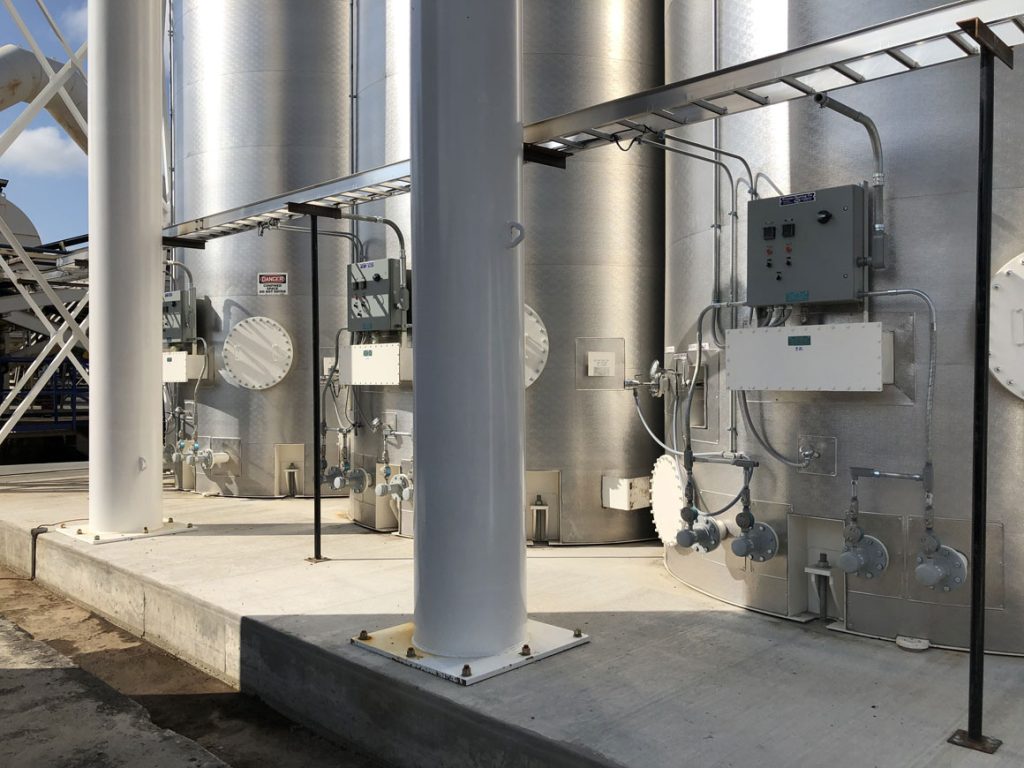
In the Gulf, it is easy to assume that heat is the last thing a factory needs to buy. Ambient temperatures in the UAE, Saudi Arabia, Oman, Qatar, Bahrain and Kuwait already sit far above those of northern Europe for much of the year. Process plants, however, are not trying to warm a room. They are trying to hold oil, water, food, plastic or a metal tool at a precise temperature, often in conditions that are humid, dusty, salty or corrosive. The climate does not replace a properly specified heating element; it makes the specification more demanding.
Process heat is not space heat
A desalination plant, a dairy, a petrochemical skid or a plastics line each needs heat in a particular place: inside a tank, along a pipe, in a mould or across a sealing jaw. The element must reach temperature quickly, hold it, and survive the medium around it. If it fails, the problem is not discomfort. It is spoiled product, a shut line, or a safety trip.
Electric industrial elements remain common because they are compact, controllable and can be built into equipment without a fired boiler. The most familiar type is the tubular element: a resistance wire inside a metal sheath, packed with mineral insulation. Depending on the sheath material and the shape, the same family of tubular heating elements can be used in air, in oil, or immersed in water and process fluids. Cartridge heaters, band and clamp heaters, and infrared quartz elements cover other duties, from moulds to surface heating.
Manufacturers such as BYM Rezistans, which produces standard and custom industrial elements in Turkey, typically supply these types for food machinery, plastics, packaging and process plant — provided the buyer specifies the conditions clearly.
Food processing: hygiene and even heat
Food and beverage plants are well established in the UAE and across the Gulf, from dairy and bakery to dates, oils and ready meals. Heating elements appear in ovens, fryers, water baths, tanks and packing machines. Here the priorities are even heat, a sheath material that can stand regular cleaning, and a design that does not trap product.
Stainless steel is the usual starting point for elements in contact with water or food, but the grade still needs to match the process. Chlorinated cleaning chemicals, salty products and frequent wash-downs all shorten the life of the wrong sheath. A poorly seated element can also create a cold or hot spot that affects cooking or pasteurising times. Control matters as much as the heater itself: a simple on/off switch is rarely enough when product quality depends on a narrow temperature band.
Plastics, packaging, oil and water
The region’s logistics and consumer markets support a large packaging and plastics sector. Injection and extrusion machines use clamp or barrel heaters around the cylinder, and cartridge heaters in dies, hot runners and sealing tools. These applications punish a vague specification. The diameter, length, wattage and the way the leads leave the element must match the machine. Replacing a failed band or cartridge with a generic part of “about the right size” is a common cause of uneven melt and scrap. Air-conditioning in the hall does not automatically protect the machine; what matters is the temperature of the tool and the melt.
Oil and gas, petrochemicals and desalination are the duties that most clearly reflect Gulf conditions. Immersion heaters in tanks, process heaters for oils and chemicals, and elements associated with water treatment all face moisture, salts and, in coastal plants, a chloride-rich atmosphere. Sheath material, watt density and the arrangement of the flanges then become more important than the catalogue photograph.
A watt density that is acceptable in clean, still water may be too high for a viscous oil or a fluid that can bake onto the sheath. Scale from hard or desalinated water can also insulate the element and cause it to overheat. In these plants, custom tubular elements, correctly rated and fitted, usually last longer than a cheap import chosen only on price. A spare of the exact type on the shelf is cheaper than an unplanned shutdown in August.
Specifying for a hot, humid climate
Several practical points are easy to miss when equipment is ordered from a temperate-climate catalogue.
First, the terminal enclosure and cable entry must be suitable for humidity, dust and, in many outdoor or semi-outdoor installations, a high ambient temperature. An element can be perfectly rated for the fluid and still fail at the terminals because moisture or heat has reached the connections.
Second, the control system should be chosen with the same care as the heater. Thermocouple temperature sensors are widely used because they are robust, cover a wide temperature range, and can be built in the lengths and sheaths that process plant requires. The sensor needs to sit where the process actually matters, not in a convenient but unrepresentative pocket, and the compensating cable must be correctly specified.
Third, storage and installation on site deserve attention. Elements left unprotected on a humid dock or in an open yard can absorb moisture in the mineral insulation before they are ever energised. Keeping spares in a dry store, or following a dry-out procedure, prevents early failures that are then blamed on the manufacturer.
Fourth, ask for documentation: voltage, wattage, sheath material, ingress protection of the head, and the intended medium. A supplier who cannot state those clearly is not a bargain.
The Gulf’s industries will continue to need process heat, however hot the air is outside the plant gate. The reliable choice is usually the element specified for the medium, the temperature and the atmosphere, fitted with a proper sensor and a terminal arrangement that can live with humidity and dust. That is a quieter decision than a major capital project, but it is often the one that keeps a line running.