Interior design isn’t only about choosing attractive furniture or expensive finishes. Some of the biggest improvements come from elements that solve practical problems while quietly changing the character of a space. Curtains Abu Dhabi and glass partition systems are two good examples.
At first, they may seem like completely different products. Curtains control sunlight, privacy and ambience, while glass partitions divide spaces without building permanent walls. Used together, however, they can create interiors that feel more spacious, flexible and carefully considered.
This combination works particularly well in modern villas, apartments, offices, clinics, hospitality environments and commercial spaces across Abu Dhabi and the UAE. The trick is knowing where each element adds the most value.
Why Curtains and Glass Partitions Work So Well Together
A conventional solid wall creates a clear separation between two areas, but it also blocks light and makes a room feel more enclosed. Glass does almost the opposite. It establishes a physical boundary while allowing daylight and visual connection to pass through. The problem is privacy. This is where curtains become useful.
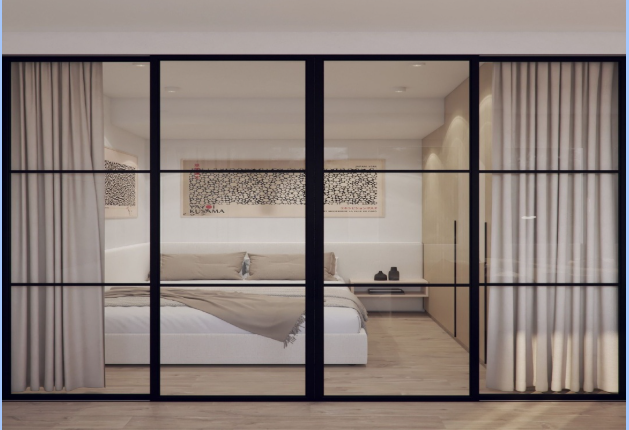
A glass meeting room, bedroom partition or consultation space can remain visually open when privacy isn’t required. Curtains can then be drawn when occupants need a more private environment.
Using Curtains Abu Dhabi to Control Light and Privacy
The climate and strong daylight in Abu Dhabi make window treatments more than a decorative finishing touch. The right curtains can help manage:
- Direct sunlight
- Glare on screens and televisions
- Visual privacy
- Interior ambience
- Bedroom darkness
- Furniture and fabric exposure to sunlight
For bedrooms, blackout curtains can provide stronger light control and a more comfortable sleeping environment. Living rooms may benefit from layering sheer curtains with heavier drapes. During the day, sheers can soften incoming daylight while maintaining some privacy. In the evening, the heavier layer can provide greater privacy.
Glass Partition Designs for Modern Interiors
A glass partition can divide a room without making it feel divided. There are several approaches to consider.
Clear Glass Partitions
Clear glass maintains maximum visibility and daylight.
They’re particularly useful for:
- Office meeting rooms
- Manager cabins
- Home offices
- Reception areas
- Showrooms
If privacy isn’t a major concern, clear glass provides a clean and contemporary appearance.
Frosted Glass
Frosted or partially frosted glass provides greater visual privacy while retaining natural light. It works well for:
- Conference rooms
- Bathroom partitions
- Clinic rooms
- Office cabins
- Residential interiors
Frosted designs can also incorporate patterns, stripes, logos or custom graphics.
Fluted or Textured Glass
Textured glass has become increasingly popular in contemporary interiors because it introduces privacy and visual interest without completely closing off the space.
Fluted glass, for example, creates a softer visual barrier and works particularly well with warm wood, neutral fabrics and modern lighting.
Office Glass Partition: A Practical Approach
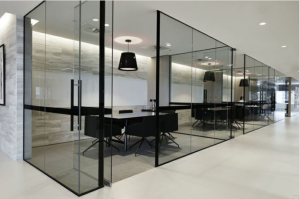
In an office, partitions have to do more than look good. An office glass partition should support the way employees actually work. For example, a completely transparent meeting room may look impressive but can become distracting if people are constantly walking past it.
A better solution could be clear glass combined with strategically positioned blinds or curtains. This gives the meeting room an open appearance when available while allowing privacy during presentations, interviews or confidential discussions.
Acoustic performance should also be considered. Glass alone does not automatically create acoustic privacy, so the specification of the glass, framing, seals, doors and surrounding construction matters.
For offices where confidential conversations are common, discuss acoustic requirements with the partition contractor before installation.
Combining Curtains With Glass Partitions at Home
The same concept works surprisingly well in residential interiors.
Home Office
A glass partition can separate a home office from the living room without making the apartment feel smaller. Add a curtain or internal blind to the partition and the workspace can be visually closed during calls or focused work.
Bedroom
In an open-plan bedroom, glass can separate the sleeping area from a dressing space or bathroom. Curtains provide the privacy layer without permanently blocking the connection between spaces.
Living and Dining Areas
Glass partitions can subtly divide a dining area from the living room while maintaining the feeling of an open-plan layout. Sheer curtains can then soften nearby windows and connect both zones visually.
Choosing Curtains for a Glass-Dominated Interior
When a room already contains substantial glass, curtain selection becomes more important. Too many strong patterns can make the space visually busy. For contemporary interiors, consider:
- Linen-look fabrics
- Neutral sheers
- Soft beige
- Warm white
- Greige
- Light grey
- Earthy tones
- Subtle geometric textures
If the glass partition has black aluminium framing, charcoal or neutral curtains can reinforce the architectural lines. For warmer interiors with brass, oak or walnut finishes, cream, taupe and natural linen tones can create a softer relationship between the materials.
The objective isn’t to make the curtains identical to the partition. They simply need to belong to the same design language.
Curtains Shop in Abu Dhabi: What Should You Ask?
When visiting a curtains shop in Abu Dhabi, don’t choose fabric based only on a showroom display. Ask about:
- Fabric composition
- Blackout percentage
- UV resistance
- Cleaning requirements
- Shrinkage
- Curtain lining
- Track or rod options
- Motorization
- Installation
- Warranty
- Fabric samples
Always request samples where possible. A curtain that looks beige under artificial showroom lighting may appear significantly different in direct daylight. For larger projects, it is worth testing samples in the actual room before confirming the final order.
Design Considerations Before Installation
Good results depend heavily on planning. Before installing either curtains or a partition, consider the position of furniture, electrical points, doors, lighting and air-conditioning outlets. For glass partitions, also think about door swing, access, framing and cleaning.
For curtains, check whether the track will interfere with ceiling details, cabinetry or lighting. Motorized curtains may also be worth considering for large windows or difficult-to-reach areas. Smart controls can make them particularly convenient in villas, boardrooms and hospitality spaces.
Conclusion
The combination of Curtains Abu Dhabi and modern glass partition systems offers something that traditional interior construction often struggles to provide: flexibility without sacrificing aesthetics. Glass can create separation while maintaining light and visual openness. Curtains can then introduce privacy, softness and light control whenever required.
For homes, offices and commercial environments, this combination allows a space to adapt throughout the day rather than remaining fixed in one configuration. The best results come from treating curtains and partitions as parts of the same interior scheme. Consider the architecture, natural light, privacy requirements, materials, furniture and daily use before making the final selection.