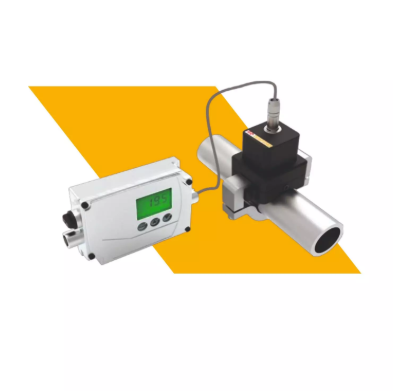
Temperature measurement becomes more complicated when a process line is already operating. In a UAE petrochemical plant, refinery, water-treatment facility, or manufacturing unit, adding a new measurement point may involve shutdown planning, pipe modification, welding, thermowell installation, and process-safety checks.
That can make a seemingly simple temperature-monitoring requirement much harder than expected.
The UAE is actively expanding its industrial and advanced-technology base. Under Operation 300bn, the Ministry of Industry and Advanced Technology is targeting an increase in the industrial sector’s contribution to GDP to AED 300 billion by 2031, with priority areas including petrochemicals, chemicals, plastics, heavy industries, machinery, energy, and water desalination.
For these facilities, temperature data isn’t just another process variable. It helps operators identify abnormal conditions, verify process performance, and maintain consistent production.
That’s where a non-invasive sensor can be useful.
What Are Non-Invasive Sensors?
Ever thought you could check the temp inside a pipe without cutting it open?
That’s basically what a non-invasive temperature sensor does. Instead of sticking a probe inside the line, a simple clamp holds the whole sensor tight against the outside of your pipe wall. It reads the heat transfer through the metal or plastic, giving you a solid reading of whatever’s flowing inside without any mess, leaks, or hassle.
This approach is different from a conventional thermocouple or RTD installed through a thermowell. There’s no need to drill a new hole into the process line for the measurement point.
The key point is simple: the sensor sits outside the process, while the temperature measurement relates to the material flowing inside.
How Are Non-Invasive Sensors Beneficial?
The biggest upside here is pretty straightforward. You get to add temp tracking to your line without cutting, welding, or drilling a single hole in your piping.
1. No need to breach your process
Cutting into an active line is always a headache. You have to pull permits, schedule a shutdown, drain the line, and pray you don’t end up creating a permanent leak point. A clamp-on setup gets around all that extra work. When your instrumentation team needs another temp reading on a running line, you just strap the sensor on, wire it up, and move on to the next job.
2. Lower leakage and contamination concerns
Because the sensor doesn’t enter the process medium, there isn’t a new thermowell penetration that could become a potential leakage path. It also avoids direct contact between the sensing element and the process fluid.
Tempsens specifically lists no penetration, no contamination risk from the sensor, and easier installation among the applications and features of its non-invasive clamp sensor.
3. Faster installation
A clamp arrangement can be considerably simpler than modifying a pipe, particularly for temporary monitoring, verification, or retrofit applications. This matters when a maintenance team has limited access to the production line.
4. Useful for checking existing measurements
Suppose an existing RTD is showing an unexpected temperature. Rather than immediately removing it or modifying the line, an external measurement can provide an independent comparison. Tempsens identifies verification of existing invasive sensors as one application for its clamp sensor.
5. Easier expansion of monitoring points
A plant may have dozens of pipes but only a handful of temperature instruments. Adding monitoring to selected lines can help maintenance and process teams understand conditions at points that previously had no direct measurement.
From an application-engineering standpoint, one detail shouldn’t be overlooked: clamp sensors aren’t automatically suitable for every process. Pipe material, diameter, wall construction, flow conditions, and calibration all affect the result. For the right application, though, the simplicity of the installation can be a real advantage.
Industrial Applications of Non-Invasive Sensors in UAE Industries
Petrochemical and Chemical Processing
UAE petrochemical and chemical facilities operate extensive networks of process piping. A non-invasive temperature sensor can be considered for monitoring selected liquid lines where adding a thermowell would require process intervention. It can also provide a secondary reading for checking an existing temperature instrument.
Oil and Gas Facilities
Temperature can help operators monitor process conditions across transfer and utility lines. Clamp-on measurement can be useful when engineers need an additional monitoring point without introducing another penetration into an existing pipe.
Water Treatment and Desalination
Water and desalination are priority areas within the UAE’s industrial strategy. Temperature monitoring can support process checks on selected water lines, particularly where an external measurement is adequate for the application.
Power and Utilities
Power and utility facilities rely on continuous monitoring across piping systems. The UAE Department of Energy notes that continuous electricity and water supply are central to commercial and industrial activity in Abu Dhabi. Non-invasive measurement can be considered where teams need additional temperature data without redesigning an established pipe section.
Manufacturing and Process Plants
Manufacturing plants often need temperature information at multiple points, but not every location justifies a permanent invasive instrument. A clamp-on sensor can offer a practical option for retrofit monitoring, troubleshooting, or process verification.
Where to Find the Best Supplier for Non-Invasive Sensors?
Choosing a supplier shouldn’t come down to sensor price alone. For industrial temperature measurement, engineers should check the sensor’s temperature range, accuracy, response time, pipe-size compatibility, output options, calibration support, and suitability for the actual process conditions.
Tempsens is a global manufacturer of industrial temperature measurement solutions, serving process industries that require precise, reliable, and continuous temperature monitoring.
For its non-invasive sensor, Tempsens provides analog outputs including 4-20 mA, 0-20 mA, and 0-10 V, with optional RS-232/RS-485 communication. The manufacturer also states that parameters such as pipe material and pipe diameter can be configured through the sensor’s electronic interface.
For UAE projects, the right supplier is one that can first assess the application, then recommend the measurement arrangement rather than simply offering a standard sensor.
FAQs
1. What’s a non-invasive temperature sensor?
It’s just a sensor that reads process temps directly from the outside of your pipe.
2. Can you actually use these on industrial piping?
Yes. They work great for plenty of industrial setups, especially when you can’t afford to stop the process or don’t want extra leak risks.
3. Do I need to drill into the pipe to install one?
No. You just clamp it right onto the outside surface, which means no drilling, no cutting, and no process downtime. It’s easily one of the best choices when you need to retrofit old lines fast.
4. How accurate are non-invasive sensors in real life?
It really comes down to the sensor build and how well it’s set up. For instance, Tempsens rates their clamp-on sensor for metal pipes at about ±3°C out of the box, but if you do a proper single or multi-point calibration on site, you can get those numbers even tighter.