Saudi Arabia’s vast desert interior has quietly become one of the most compelling reasons travelers are looking at the Kingdom in a new light. What was once seen mainly as empty land between cities is now framed as a destination in its own right, offering everything from adrenaline-fueled dune driving to quiet nights spent watching stars far from any city glow.
The most accessible way to experience this landscape is through organized dune bashing and off-road tours, typically run out of desert camps near major cities. Skilled drivers navigate soft, rolling sand in four-wheel-drive vehicles, and many of these excursions pair the ride with a traditional Bedouin-style camp experience complete with food, music and shisha lounges set up for the evening.
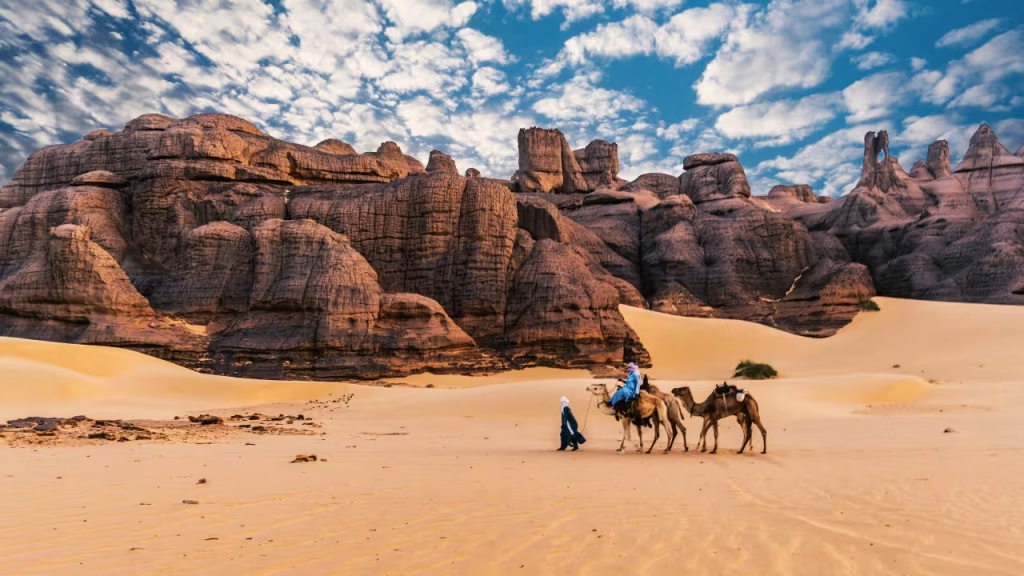
Beyond the thrill-seeking side, there is a slower, more contemplative way to engage with the desert. Camel trekking remains one of the oldest and most authentic ways to move through these landscapes, echoing the routes used by traders and nomadic communities for centuries before modern roads existed.
Hot-air ballooning has also emerged as a popular option in certain regions, giving visitors an aerial view of canyons, rock formations and endless dunes that is impossible to fully appreciate from ground level. Early morning flights are usually preferred, both for cooler temperatures and for the soft light that makes the terrain look almost otherworldly.
Stargazing deserves its own mention, since Saudi Arabia’s remote desert areas sit far from significant light pollution, making them genuinely excellent for night-sky viewing. Some camps and tour operators now offer dedicated astronomy sessions with telescopes, appealing to travelers who want something calmer after a day of more physical activity.
Hiking and canyon exploration add another dimension for visitors who prefer to explore on foot, with trails winding through sandstone formations, dry riverbeds and hidden valleys. These routes vary widely in difficulty, so it is worth checking with local guides or tour operators about conditions before setting out, especially given how quickly desert temperatures can shift.
Saudi Arabia is positioning desert tourism as one of the key pillars of its wider tourism expansion strategy, and through Vision 2030 the Kingdom is developing desert landscapes into high-value travel destinations that combine heritage, adventure, culture and luxury hospitality. AlUla stands out as the strongest example of this shift, home to Hegra, the country’s first UNESCO World Heritage Site, along with AlUla Old Town, Elephant Rock, Jabal Ikmah and a wider stretch of dramatic desert scenery built for hiking, ballooning, stargazing and cultural tours.
For anyone comparing camps, tour operators or planning logistics before a trip, https://saudia-online.com/ can help travelers weigh their options before booking. Practical planning matters here, since desert excursions depend heavily on season, time of day and the specific region being visited, and prices and inclusions can vary considerably between operators.
Travelers researching entry requirements, safety guidance or general travel advisories before a trip can also consult the official Saudi tourism authority, which publishes up-to-date information for international visitors. Combining that kind of official guidance with on-the-ground research makes it far easier to choose the right desert experience for a given budget and comfort level.
Ultimately, the appeal of Saudi Arabia’s deserts lies in their range. A single trip can include an afternoon of high-speed dune driving, a quiet camel ride at sunset and a night spent under an unusually clear sky, all within the same stretch of sand. That variety, paired with steadily improving infrastructure and tour options, is why desert adventures are increasingly seen as a highlight of any visit to the Kingdom rather than a side activity.