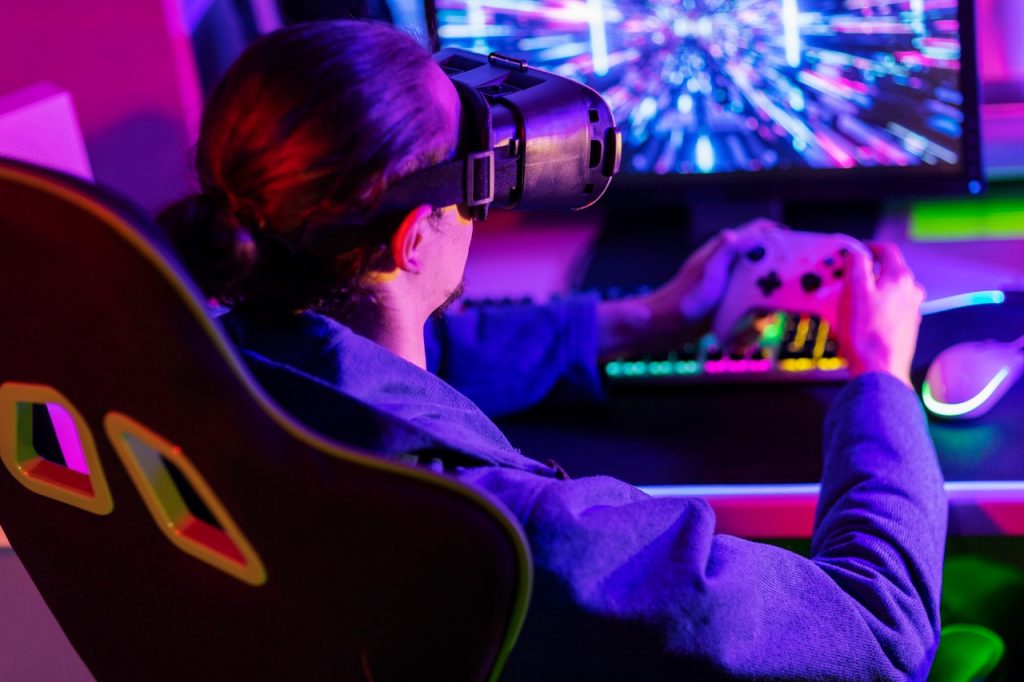
Online slot gacor has become one of the most recognizable forms of entertainment in the digital age. People no longer need to sit in the same room to enjoy a multiplayer game. With an internet connection and a compatible device, players can compete against opponents, cooperate with teammates, explore virtual environments, and communicate with communities located thousands of miles away.
The gaming industry has changed considerably as technology has developed. Better processors, advanced graphics, faster internet connections, smartphones, and cloud computing have all contributed to the expansion of online gaming.
What makes online gaming particularly interesting is that it combines several types of entertainment in one experience. It can be competitive like sports, social like a community platform, creative like digital art, and immersive like a movie.
A New Era of Interactive Entertainment
Traditional entertainment usually places the audience in a passive role. A person watches a movie or listens to music without directly controlling what happens.
Gaming is different.
Players actively influence the experience. Their decisions can change the outcome of a match, mission, or story.
Online gaming takes this concept further by introducing other real people into the experience.
Instead of interacting only with computer-controlled characters, players can communicate and compete with actual people in real time.
This combination of interaction and social connection has helped online gaming attract a massive audience.
From Local Multiplayer to Global Communities
Multiplayer gaming originally depended heavily on physical proximity.
Friends could play together by sharing a console or connecting computers through a local network. These experiences were entertaining, but the number of available players was limited.
Internet connectivity removed this limitation.
A player could now join a server containing people from different cities and countries. This created a new form of gaming community in which geography became much less important.
Over time, these communities became increasingly organized around individual games, genres, teams, and creators.
What Keeps Players Coming Back?
Online games often use progression systems to encourage long-term participation.
Players may earn experience points, unlock new equipment, improve characters, or achieve higher rankings.
These systems give players clear objectives.
Competition adds another layer. A player who loses a match may want to improve and try again.
Social relationships can also encourage continued participation. Players may return because their friends are online and want to play together.
This combination of progression, competition, and social interaction makes online gaming highly engaging.
The Importance of Multiplayer Design
Creating a successful multiplayer game is more complicated than simply allowing multiple players to enter the same environment.
Developers need to consider matchmaking, server performance, communication systems, game balance, anti-cheat technology, and player behavior.
A good multiplayer game should provide meaningful competition while preventing experienced players from completely overwhelming beginners.
Game balance is particularly important because players expect competitive environments to feel fair.
Different Experiences for Different Players
Online gaming is not a single type of entertainment.
A competitive player may spend hours practicing precise movements and strategies. Another player may prefer relaxing with friends in a cooperative environment.
Some people enjoy exploration, while others are interested in character development or creative construction.
The industry supports these different preferences through a huge range of genres.
Competitive Shooters
Competitive shooter games are among the most popular online experiences.
Players generally compete individually or in teams while completing objectives or defeating opponents.
Success can depend on:
- Reaction speed
- Accuracy
- Map knowledge
- Positioning
- Communication
- Tactical awareness
Because matches can be relatively short, players can quickly return to another game after a defeat.
Online Role-Playing Experiences
Role-playing games provide a very different type of online experience.
Players can create characters and gradually develop their abilities.
They may explore virtual worlds, complete missions, collect equipment, participate in battles, and interact with other players.
Some online role-playing environments are designed to remain active for many years, with developers continuously adding new content.
Strategy and Management Games
Strategy games focus heavily on planning.
Players may need to manage resources, develop economies, construct buildings, control territories, or organize armies.
These games can be slower than action titles but require careful decision-making.
A successful strategy often involves predicting what opponents might do several steps in advance.
Online Sports and Racing
Sports and racing games provide another popular form of multiplayer entertainment.
Players can compete in virtual versions of football, basketball, cricket, racing, and other activities.
Online competitions can allow players to create teams, participate in leagues, and compare their performance against others.
These games are particularly appealing to fans who enjoy both gaming and traditional sports.
The Role of Online Communities
Gaming communities are now an important part of the overall experience.
Players share:
- Tips
- Guides
- Strategies
- Gameplay clips
- News
- Updates
- Fan art
- Tournament information
Communities can exist on forums, social networks, messaging platforms, and dedicated gaming servers.
A strong community can help a game remain popular long after its initial release.
Gaming and Friendship
Online gaming can provide a convenient way for friends to spend time together.
People who live in different cities can join the same match and communicate through voice chat.
For some players, these sessions become a regular social activity.
However, players should still maintain relationships and activities outside gaming. Digital interaction can complement real-world relationships but should not necessarily replace them.
The Professional Gaming Scene
The growth of competitive gaming has created professional esports.
Professional players compete in organized tournaments and leagues. Some specialize in particular games and spend years developing their skills.
Esports teams often include more than players. Coaches, analysts, managers, and content staff may also support the organization.
Large tournaments can attract audiences through livestreams and physical events.
The Growth of Gaming Creators
Gaming has also created opportunities for online content creators.
Creators can produce gameplay videos, tutorials, reviews, news, and entertainment content.
Some specialize in educational content, helping new players understand complex mechanics.
Others focus on entertainment and personality.
Live streaming allows creators to interact directly with viewers while playing.
This has transformed gaming into a form of spectator entertainment as well as participation.
Online Gaming and Education
Although gaming is primarily associated with entertainment, some games can encourage useful skills.
Strategy games may require planning and resource management. Puzzle games can encourage logical thinking.
Multiplayer games can require communication and teamwork.
Educational games can also use interactive mechanics to make learning more engaging.
However, the benefits depend on the game and the way it is used. Gaming should not automatically be considered educational simply because it involves problem-solving.
Challenges of Online Gaming
The growth of online gaming has also introduced challenges.
One concern is excessive gaming. Spending too much time playing can interfere with sleep, exercise, education, work, and relationships.
Another issue is online behavior. Players may encounter harassment, bullying, cheating, or inappropriate communication.
Financial spending is another consideration. Many games offer optional digital purchases that can become expensive if users do not monitor their spending.
Creating a Healthy Relationship With Gaming
A healthy gaming routine starts with balance.
Players should make time for sleep, exercise, work, education, family, and other interests.
Taking regular breaks can reduce fatigue during longer sessions.
It is also useful to establish clear limits on spending and avoid making unnecessary purchases simply because they are available.
Responsible gaming allows players to enjoy the positive aspects of the hobby without allowing it to dominate their daily lives.
Protecting Yourself Online
Online safety should be part of every player’s gaming routine.
Players should avoid sharing sensitive information with strangers and should be cautious about suspicious messages.
Strong passwords and two-factor authentication can help protect accounts.
Players should also avoid downloading unofficial software or clicking unknown links promising free game items or rewards.
Parents should discuss online safety with younger players and explain why personal information should remain private.
The Importance of Servers
Game servers are the backbone of many online experiences.
They process information about player positions, actions, matches, statistics, and other game events.
Server location can affect latency. Players generally experience better responsiveness when connected to servers that are geographically closer to them.
Server capacity is also important. If too many players attempt to connect at once, technical problems can occur.
The Future of Cloud Gaming
Cloud gaming could make high-quality games accessible to more people.
Instead of requiring a powerful local computer, remote servers can process the game and stream the visual output to the player’s device.
This could reduce the importance of expensive hardware for certain gaming experiences.
However, cloud gaming requires reliable internet infrastructure. Poor connectivity can negatively affect responsiveness and image quality.
Artificial Intelligence and Personalized Games
Artificial intelligence could significantly influence future online games.
Developers may use AI to create smarter characters, improve matchmaking, detect unusual behavior, and personalize experiences.
Games could potentially adjust difficulty based on a player’s skill level.
AI may also help developers create larger and more dynamic virtual environments.
Virtual Reality and Immersive Multiplayer
Virtual reality provides another possible direction for online gaming.
VR allows players to interact with digital environments using specialized headsets and controllers.
Future multiplayer VR experiences could make communication and cooperation feel more physical and immersive.
Augmented reality could take a different approach by placing digital elements into real-world environments.
Cross-Platform Gaming
Cross-platform play has become increasingly important.
When supported, players using different devices can participate in the same online matches.
This can make it easier for friends to play together even when they own different hardware.
Larger combined player populations can also improve matchmaking opportunities.
The Economic Influence of Gaming
Online gacor22 login has created an enormous digital economy.
Revenue can come from game sales, subscriptions, downloadable content, digital purchases, advertising, sponsorships, and esports.
The industry also supports thousands of jobs across software development, art, marketing, broadcasting, event management, content creation, and technology.
Gaming has therefore become an important economic sector rather than simply a form of leisure.
What the Future Holds
The future of online gaming will likely involve greater connectivity and immersion.
Artificial intelligence may create more intelligent virtual characters. Cloud technology could make advanced games accessible across more devices.
Virtual reality may introduce new social experiences, while improved internet infrastructure can make multiplayer gaming more responsive.
The boundaries between gaming, streaming, social interaction, and digital communities may also continue to disappear.
Games could increasingly become persistent online spaces where people meet, compete, attend events, create content, and communicate.
Conclusion
Online gaming has developed into a major part of modern digital culture. Its evolution has been driven by technological progress, but its popularity comes from something more fundamental: people enjoy competition, creativity, achievement, exploration, and social interaction.
Modern games can connect players across continents, support professional esports, create content careers, and provide communities where people with shared interests can interact.
At the same time, responsible gaming remains important. Players need to manage their time, spending, privacy, and online interactions carefully.
As artificial intelligence, cloud computing, virtual reality, and cross-platform technology continue to advance, online gaming will likely become even more immersive and accessible.
The future of online gaming is not simply about creating larger or more visually impressive games. It is about building digital experiences that bring people together and give them new ways to play, compete, communicate, and create.